Questions for you:
- Does your organisation treat online content performance as primarily a reflection of content quality, or does it account for the substantial role of random early engagement patterns in determining which content succeeds?
- Where else in your work do you see the same amplification dynamic — where early random advantages compound into durable differences that are then attributed to quality?
- How would your content or communications strategy change if you accepted that virality is substantially a lottery rather than a skill?
- If you’re aiming to go viral in any aspect of your personal or professional life – a hobby, an interest, a recruitment campaign – are you prepared for the consequences of that much attention and scrutiny and response?
Organisational applications:
Separating content quality from distribution luck: The story’s most practically useful point for organisations producing content is that the metrics used to evaluate content — views, shares, engagement rates — are confounded by the randomness of early distribution in a way that makes them poor measures of underlying quality.
A post that underperformed may have been excellent content that reached the wrong early audience at the wrong moment. One that outperformed may have been algorithmically lucky. Treating performance data as a signal about content quality rather than about the interaction between content and random early conditions leads to systematic mislearning: organisations optimise for the features of lucky content rather than genuinely good content, which are often different things.
Volume as the rational response to a high-variance system: If virality is substantially a lottery, the rational production strategy is not to try to engineer the winning ticket — attempting to predict which content will trigger the algorithm — but to increase the number of tickets held by producing consistently at volume.
This is the casino logic applied to content: you cannot predict which individual piece will succeed, but you can ensure that you have enough in distribution for the Law of Large Numbers to work in your favour over time. Organisations that produce sporadically and invest heavily in each individual piece are playing the lottery differently from those that maintain consistent high-volume output, and the latter strategy tends to produce more reliable aggregate reach in high-variance algorithmic environments.
The feedback loop problem in content strategy: The story notes that random early successes shape subsequent creative directions through feedback loops — content that happens to perform well influences what gets made next, regardless of whether its success was due to quality or luck.
This is a specific form of the survivorship bias problem: organisations learn from visible successes and adjust accordingly, without accounting for the randomness that produced those successes. A content team that pivots its entire strategy based on one viral post is potentially optimising for a chance event rather than a genuine signal. Building in deliberate variation, and treating a run of good or bad performance as a sample of limited statistical significance rather than a clear indicator of direction, is the corrective.
Encourage the appropriate teams to take a step back: Arguably the problem is that creative teams will see the response to a specific post or advert or catchy slogan as being indicative of success, whereas maybe the sheer volume and/or variety of what was posted was the reason something worked. It’s extremely counter-intuitive to view a process or strategy with this breadth, especially when platforms tend to reward and rate creative efforts on an individual basis, so be prepared to work hard to demonstrate the validity of this approach.
Further reading
On algorithmic amplification, network effects, and viral dynamics:
The Tipping Point: How Little Things Can Make a Big Difference by Malcolm Gladwell. Gladwell’s account of how small contextual factors determine whether ideas spread or stall is the accessible background to the story’s argument about early engagement patterns, though it predates social media algorithms.
Everything is Obvious: How Common Sense Fails by Duncan J. Watts. Watts’s research on social contagion is the most rigorous available challenge to the idea that viral success is predictable or merit-based, based partly on experiments that reset identical content in the same market multiple times and observed entirely different outcomes.
On feedback loops, path dependence, and how random early advantages compound:
The Black Swan: The Impact of the Highly Improbable by Nassim Nicholas Taleb. Taleb’s account of Extremistan — domains where winner-takes-all dynamics produce vast inequality of outcomes from small initial differences — is the formal framework for understanding why two identical pieces of content can end up with 50 million and 47 views respectively.
The Drunkard’s Walk: How Randomness Rules Our Lives by Leonard Mlodinow. Mlodinow’s treatment of how random early advantages in creative and cultural markets compound into durable success stories covers the mechanism behind the viral amplification dynamic directly.
On content strategy, volume, and learning in high-variance environments:
Thinking in Bets: Making Smarter Decisions When You Don’t Have All the Facts by Annie Duke. Duke’s framework for separating decision quality from outcome quality is applicable to content strategy: the question is not whether a piece performed well but whether the reasoning behind producing it was sound, which requires evaluating the decision independently of the algorithm’s response.
Antifragile: Things That Gain from Disorder by Nassim Nicholas Taleb. Taleb’s argument for maintaining exposure to positive random outcomes at low cost — many small bets rather than few large ones — is the strategic prescription that follows directly from the story’s argument about virality as a lottery.
About the image
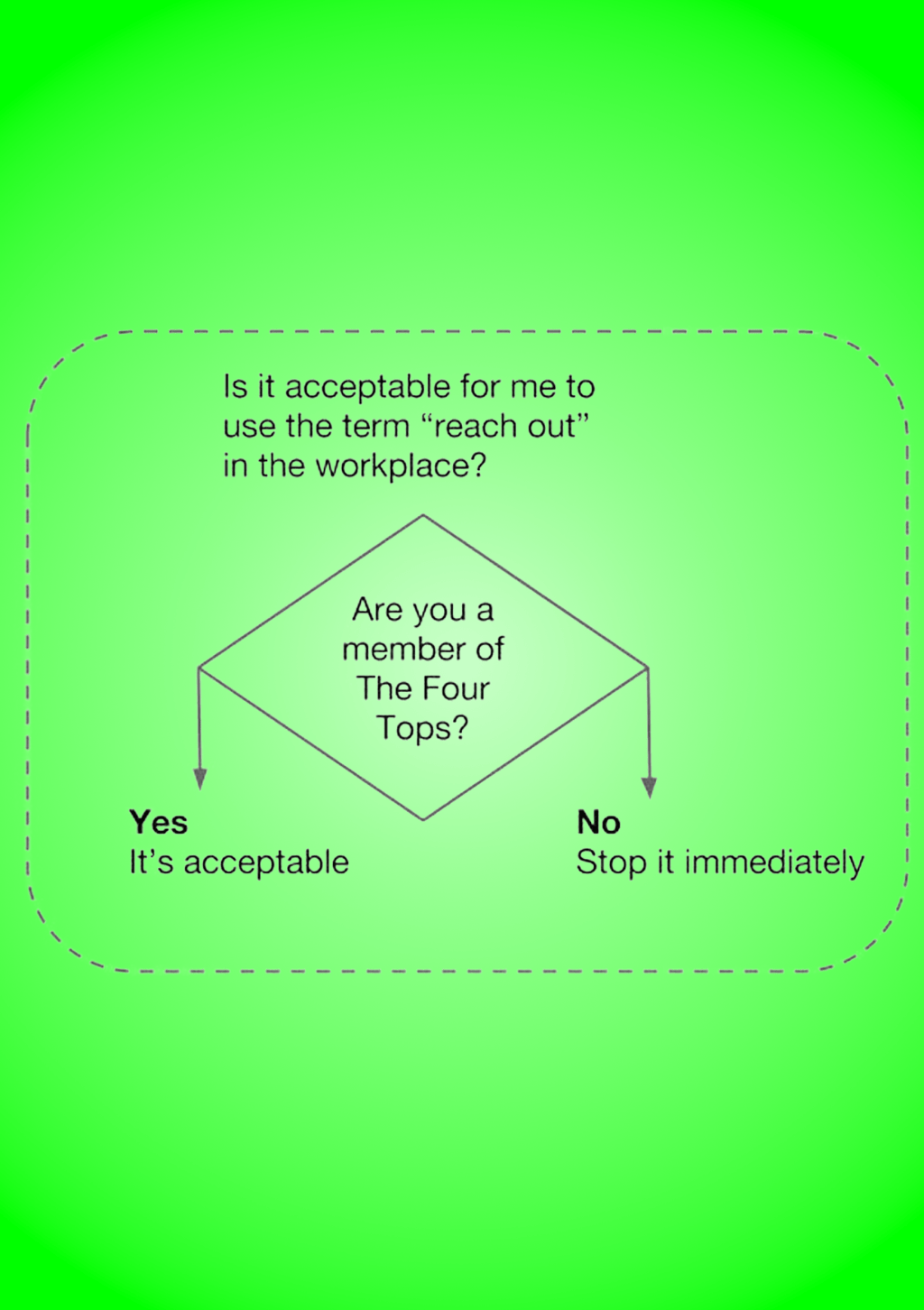
Ah, the comedy flowchart that, in 2015, gave me my first ever properly viral experience. To be fair, there haven’t been many since.
Comedy flowchart montage by Matt Ballantine, 2026
 Random the Book