Questions for you:
- How transparent are the selection and decision processes in your organisation to the people affected by them? Could they be observed and verified, as the Kleroterion could?
- Where do you rely on people trusting that a process is fair, rather than being able to see that it is fair? Should you change that?
- Can you think of a process in your organisation that would benefit from redesign to make its integrity visible rather than merely asserted? If you don’t have control of that process, how can you encourage it to be improved?
Organisational applications:
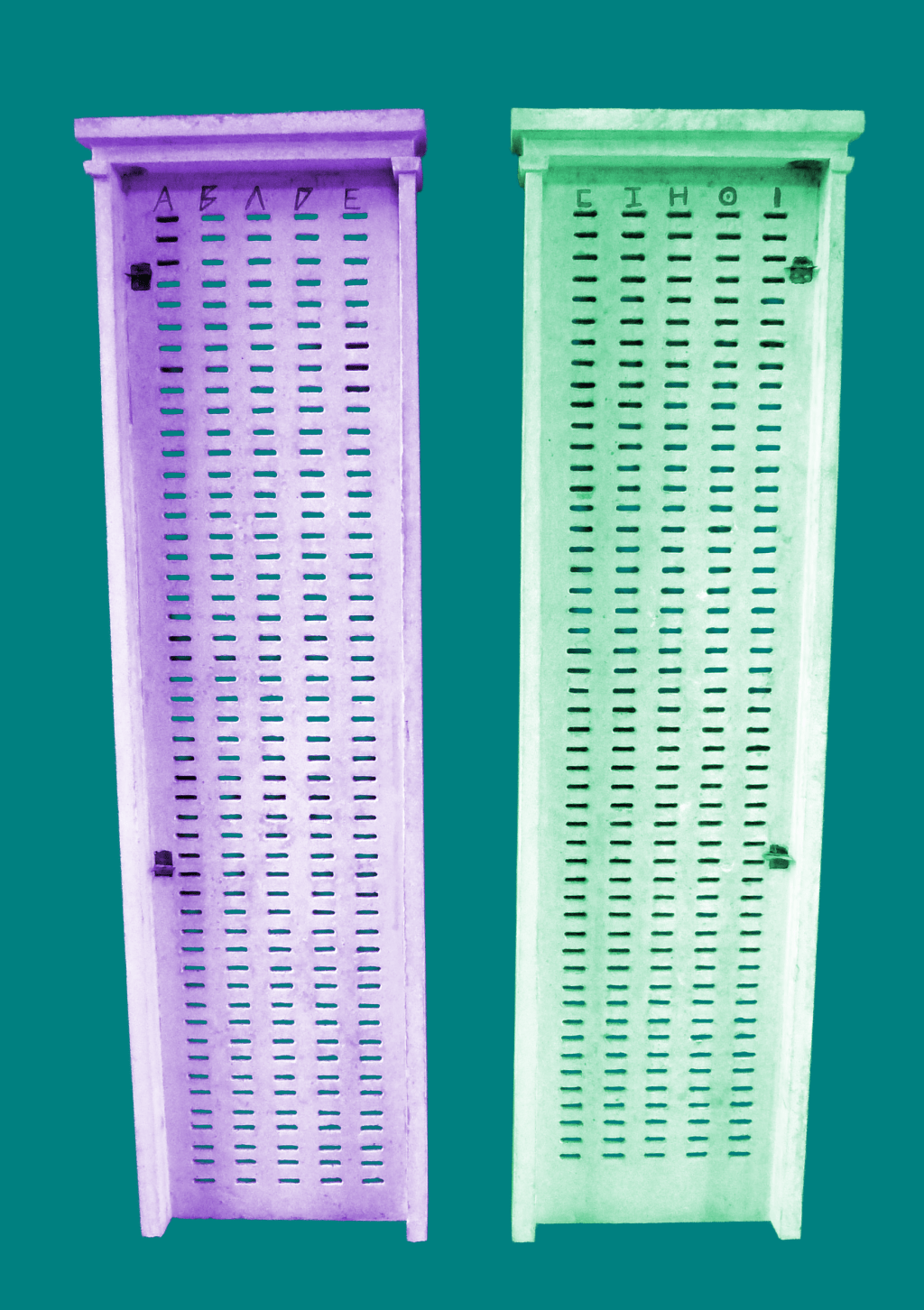
Designing for observable fairness rather than asserted fairness: The Kleroterion was built for public use. The mechanism was visible, the process was observable, and the double randomisation, first the shuffling of the name-plaques, then the falling blocks, was specifically designed to prevent any single point of manipulation.
The Athenians understood that a selection process people could watch was more durable than one they were simply told was fair. Many modern organisational processes that claim fairness operate in the opposite way: the criteria are documented, the decisions are made in rooms, and the outcomes are communicated without the reasoning. Where decisions significantly affect people’s lives or opportunities, designing the process so its integrity can be observed, not just described, tends to produce more durable trust and less grievance.
Double randomisation as a model for process integrity: The two-stage mechanism of the Kleroterion is worth attention as an engineering principle. Each stage, on its own, could be manipulated; combining two independent random processes made manipulation dramatically harder.
This logic applies directly to any organisational process where single points of control create risk of bias or corruption: procurement decisions that combine open submission with random selection among qualifying bids, performance reviews that separate rating from ranking, hiring processes that blind assessors to certain candidate characteristics before evaluation. Building independent stages into high-stakes processes, rather than relying on a single step controlled by a single person, is a practical application of the Kleroterion’s design thinking.
The cost of opacity in selection processes: The story connects naturally to the meritocracy critique elsewhere in the book. The Athenians chose sortition partly because they recognised that election was vulnerable to wealth, rhetoric, and social connection, exactly the factors that modern organisations claim their hiring and promotion processes are designed to overcome.
The Kleroterion’s public mechanism made it very difficult to claim the process had been interfered with. Most contemporary selection processes produce no equivalent assurance. Where organisations cannot make their processes fully observable, publishing the criteria, the weighting, and the aggregate outcomes by group at a minimum replicates some of the Kleroterion’s transparency function.
Further reading
On the history and practice of sortition in Athenian democracy:
Against Elections: The Case for Democracy by David Van Reybrouck. Van Reybrouck covers the Athenian use of the Kleroterion and sortition in the broader historical account of democracy before elections became its default mechanism, providing useful context for why the Athenians considered random selection more democratic than voting.
The Luck of the Draw: The Role of Lotteries in Decision Making by Peter Stone. Stone’s treatment of the philosophical foundations of random selection in civic life includes the Athenian case and analyses why the two-stage process was considered more robust than a single draw.
On process transparency, fairness, and institutional trust:
Noise: A Flaw in Human Judgement by Daniel Kahneman, Olivier Sibony and Cass R. Sunstein. The chapters on decision hygiene and structured processes cover the organisational case for designing processes whose integrity is built into their mechanics rather than dependent on the character of the individuals running them.
Thinking in Bets: Making Smarter Decisions When You Don’t Have All the Facts by Annie Duke. Duke’s argument for making reasoning explicit and observable before outcomes are known is a modern version of the Kleroterion principle: the process should be transparent enough that its fairness can be evaluated independently of whether you happened to like the result.
On meritocracy, selection bias, and the limits of expert judgment:
The Tyranny of Merit by Michael J. Sandel. Sandel’s account of how modern meritocratic selection reproduces the same advantages the Athenians were trying to counteract with the Kleroterion — wealth, social connection, and rhetorical skill — provides the contemporary context for why the ancient solution remains relevant.
Interactive exhibit
There’s a simulated Kleroterion at https://experiments.randomthebook.com/kleroterion/
About the image
Modern reconstructed kleroteria at the Ure Museum at the University of Reading.
Photo montage Matt Ballantine, 2026 Photo credit: https://commons.wikimedia.org/w/index.php?curid=19865975
 Random the Book