Questions for you:
- When did I last commit to something without being able to fully evaluate it first — and what happened?
- Is there something I’m currently holding in potential, unscratched, because revealing it would collapse the possibilities?
- How do I feel about the idea that not knowing might be more valuable to me than knowing?
Questions for your organisation:
Commitment before evaluation in hiring and procurement: The scratch card artwork reverses the standard transaction — purchase first, reveal later. Most organisational processes do the opposite: gather all available information, evaluate thoroughly, then decide. But this sequencing is often an illusion of control. Pilots, probationary periods, and limited procurement contracts are structural acknowledgements that full evaluation before commitment is impossible.
Experiment with explicitly inverting the usual sequence for lower-stakes decisions: commit to a supplier, candidate, or approach before completing the full evaluation. Track whether the commitment itself changes how the evaluation is conducted — there is good reason to think it does, since people stop looking for reasons to reject something they’ve already chosen and start looking for ways to make it work.
Preserving strategic optionality through deliberate non-revelation: Some organisational choices are irreversible — once made, they eliminate all alternatives. The collector who leaves a scratch card artwork unscratched is making a rational choice to preserve optionality at the cost of certainty.
Apply this logic to decisions about market positioning, technology architecture, or organisational structure: map which decisions are reversible and which collapse the remaining possibility space. Prefer staged, reversible commitments over comprehensive locked-in strategies where the environment is uncertain. The discomfort of not knowing is often preferable to premature closure that proves costly later.
Uncertainty as a feature in stakeholder engagement: The scratch card coating imports the psychology of gambling into an art transaction. The same psychological mechanism can be applied to how organisations introduce change. Announcing every detail of a proposed change before implementation tends to generate exhaustive preemptive criticism; leaving some elements genuinely unresolved—and being transparent about that—can produce more constructive engagement from stakeholders who feel they still have the ability to influence outcomes. This is not manipulation; it requires honesty about what is and isn’t yet decided. The distinction between manufactured uncertainty and genuine uncertainty matters, and stakeholders generally sense the difference.
Further reading
On uncertainty and commitment:
Thinking in Bets: Making Smarter Decisions When You Don’t Have All the Facts by Annie Duke (Portfolio, 2018). Examines how professional decision-making under uncertainty differs from the illusory certainty most organisations seek before committing to a course of action.
The Decision Book: Fifty Models for Strategic Thinking by Mikael Krogerus and Roman Tschäppeler (Profile Books, 2011). Includes frameworks for distinguishing reversible from irreversible decisions and for managing commitment under uncertainty.
On optionality and irreversibility:
The Art of the Good Life by Rolf Dobelli (Sceptre, 2017). Includes a chapter on optionality — the value of preserving future choices — and why closing down possibilities prematurely is a recurring human error.
Fooled by Randomness by Nassim Nicholas Taleb (Penguin, 2004). The foundational text on how uncertainty is systematically underestimated, with particular relevance to the difference between what is concealed and what is unknowable.
On the psychology of incomplete information:
Stumbling on Happiness by Daniel Gilbert (Harper Perennial, 2006). Research on affective forecasting and why people consistently misjudge how they will feel about outcomes — relevant to why the unscratched state can feel preferable to any specific revelation.
About the image
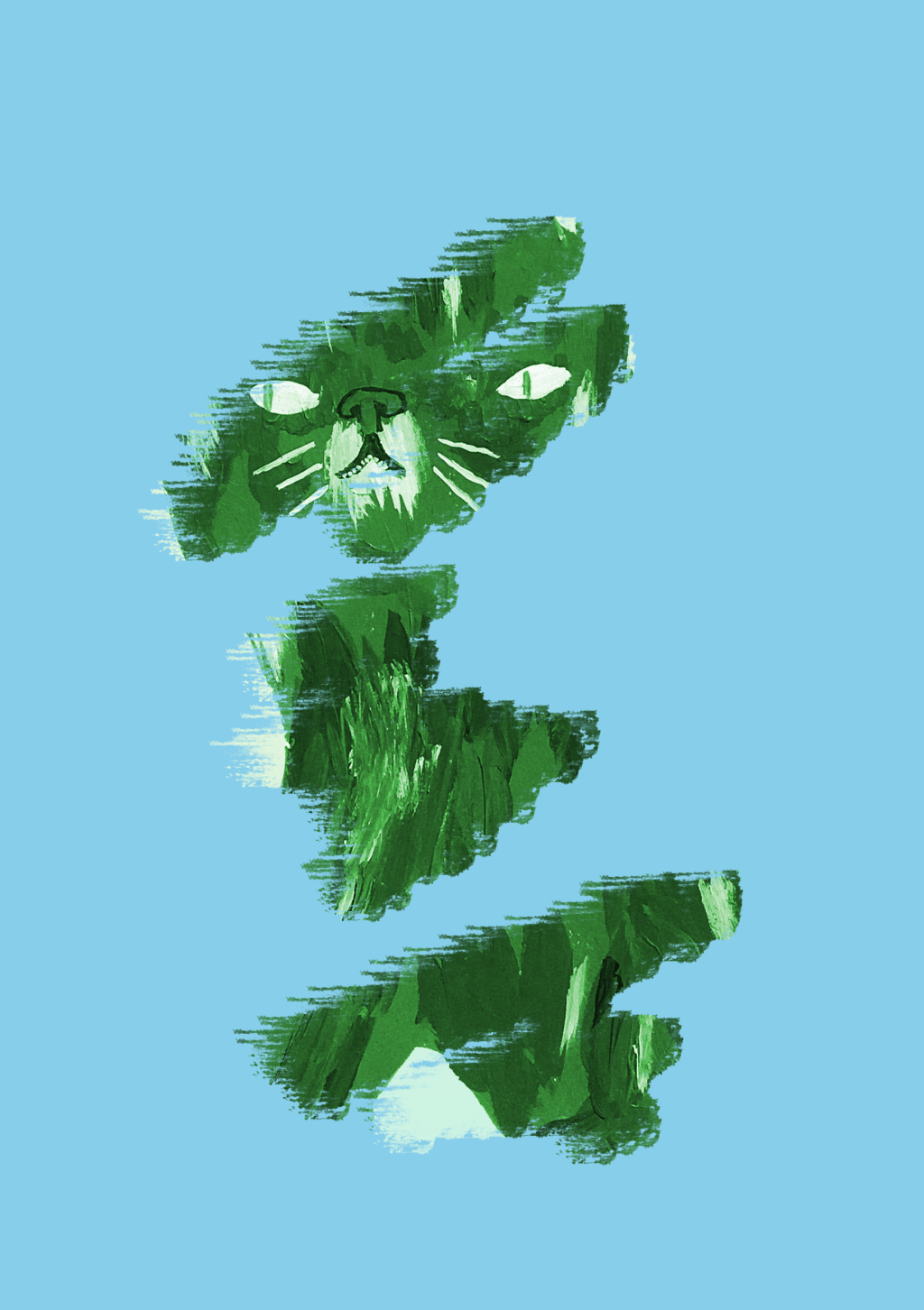
This is probably Steve’s most popular piece of art, his Not a Lost Cat poster, given some scratchcard treatment. Learn more about the original work here: https://www.canscorpionssmoke.com/lostcat/
Not a Lost Cat by @stevexoh, 2021, montage by Matt Ballantine, 2026
 Random the Book