Questions for you:
- Look at your meetings, does the same pattern emerge each time – extroverts dominate, while introverts struggle for space? What ideas are you missing out on?
- When senior people give their opinion early, does that anchor the discussion, making others reluctant to disagree or offer alternative views?
- It’s difficult to measure what you don’t hear, or to work out why someone hasn’t spoken. What sensitively applied methods can you use to figure that out, without overtly calling on anyone who seems quieter than the meeting’s average?
- Would introducing randomness to speaking order reveal contributions from people typically overlooked in standard meeting dynamics?
Organisational Applications
“Rolling for initiative” breaks hierarchy: If the highest-ranking person speaks first and gives an opinion, who’s willing to disagree? Random speaking order (dice or cards or even names drawn from a hat) ensures participation order determined by chance, not status, willingness, or connection speed. Completely following the game-based model will mean that everyone gets an opportunity. Apply this to brainstorming, strategy sessions, retrospectives – to any meeting where diverse input matters more than efficient agreement.
Separate thinking styles from speaking order: Quick-thinking extroverts jump in, thinking out loud as they reason. This leaves no space for introverts or for those who want to think before speaking. Announce the topic, give everyone two minutes of silent thinking time, then call on them to speak in random order. This prevents those with rapid verbal processing from dominating, and gives more reflective thinkers an opportunity to find entry points.
Everyone gets a turn, not just airtime: Random order brings the main benefit of game-based methods to corporate contexts: everyone gets a turn. Not just an opportunity to interrupt if you’re brave enough, but a guaranteed slot. This allows less outspoken members to speak and ensures everyone is heard. This is particularly valuable in diverse teams where cultural norms or confidence with the main language being spoken will affect participants differently.
Break patterns to generate new ideas: When the same people speak in the same order repeatedly, teams fall into familiar patterns – same objections, same alliances, same thinking paths. The suggested random roll changes interaction patterns, but is there even more you could do? Traditionally formatted meetings are often seen as inevitable, but seek out those who are innovating in this space with new techniques or tools. And if you don’t know which one to choose first, pick one at random.
Further Reading
Meeting facilitation and participation
Gamestorming by Dave Gray, Sunni Brown, and James Macanufo – game-based facilitation techniques including random methods for equalising participation and breaking hierarchy in meetings.
The Surprising Power of Liberating Structures by Henri Lipmanowicz and Keith McCandless – facilitation methods designed to include everyone, many incorporating random elements to prevent dominant voices from controlling discussions.
Facilitator’s Guide to Participatory Decision-Making by Sam Kaner – comprehensive guide to running meetings where everyone contributes, including techniques for managing different participation styles.
Introversion, group dynamics, and psychological safety
Quiet by Susan Cain – explores how meeting structures favour extroverts, showing why introverts struggle in standard formats and need alternative participation methods.
The Fearless Organization by Amy C. Edmondson – psychological safety requiring structures preventing hierarchy from silencing dissent, relevant to understanding why random speaking order matters.
Thinking, Fast and Slow by Daniel Kahneman – explains different thinking styles, relevant to understanding why quick verbal processors dominate discussions whilst reflective thinkers need preparation time.
Game-based learning and role-playing mechanics
The Gamification of Learning and Instruction by Karl M. Kapp – explores borrowing game mechanics for corporate contexts, including turn-taking systems ensuring participation equity.
Reality Is Broken by Jane McGonigal – examines how game mechanics create engagement and fairness, applicable to understanding why “rolling for initiative” works in meetings.
The Kobold Guide to Board Game Design by Mike Selinker – game design perspective on turn order mechanics, explaining why random initiative creates fairness and unpredictability valuable in collaborative contexts.
Interactive exhibit
Forgot your dice? Use our Roll for Initiative app instead!
https://experiments.randomthebook.com/rollforinitiative
About the image
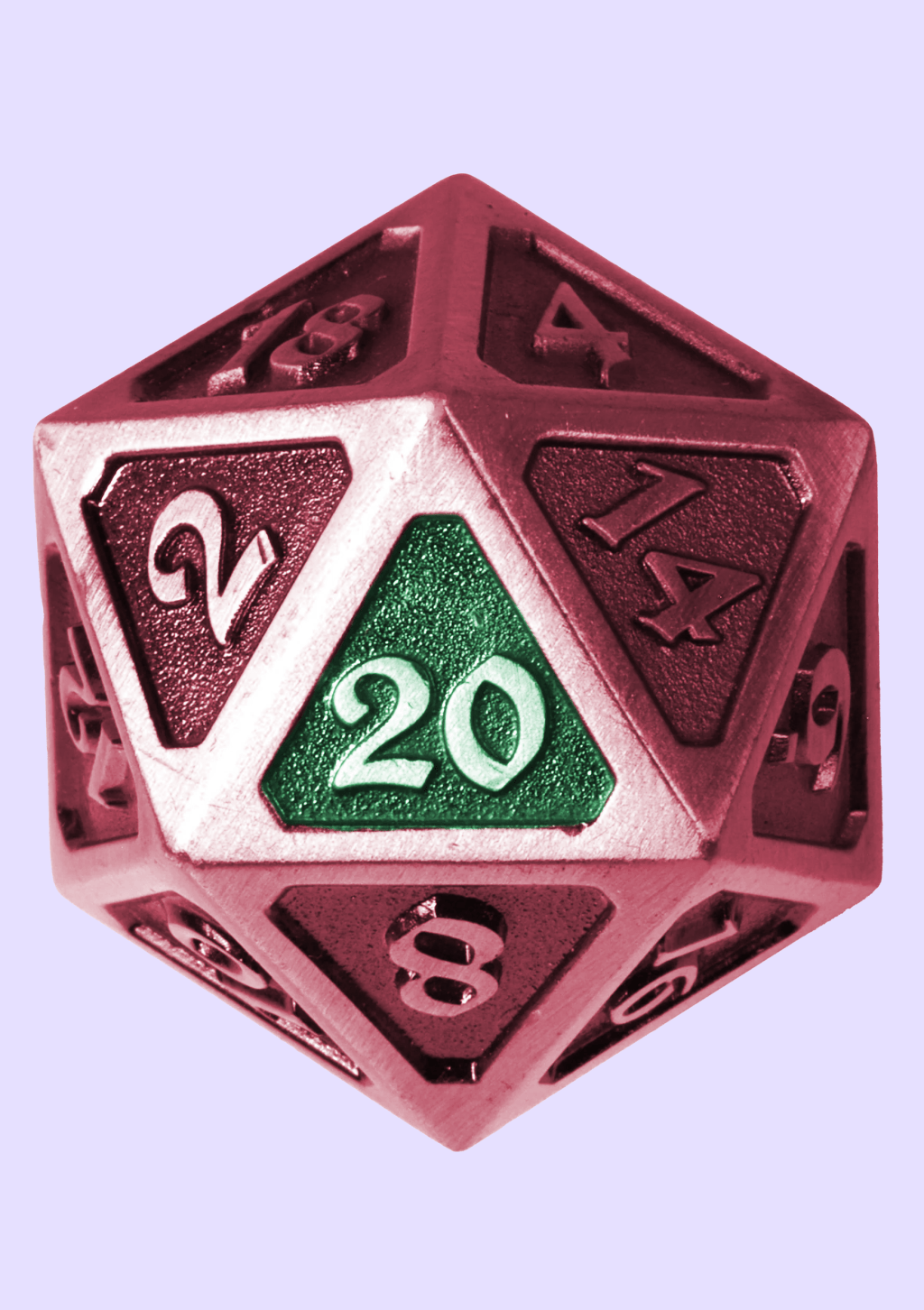
A 20-sided die (a D20 in the lingo of gaming). As a non-gamer only really used to a standard six-sided die (D6) I find these things strangely fascinating.
Photo and photo montage Matt Ballantine 2026
 Random the Book