Questions for you:
- When facing creative blocks or design challenges, do you recognise randomness as a potential tool for generating raw material that your expertise can shape, rather than seeing it as a way to abandon control?
- Looking at innovation processes, do they allow deliberate introduction of random elements to bypass habitual thinking patterns, or do they rely solely on logical extension of existing approaches?
- When random inputs produce unexpected results, do you dismiss them as irrelevant, or recognise them as opportunities to discover what works that conscious planning might miss?
- In evaluating creative outputs, do you judge based on process (was it planned?) or outcome (does it work?), understanding that effective results can emerge from random starting points shaped by skilled judgment?
Organisational Applications
Randomness within creative frameworks: John Cage and Gerhard Richter use random processes within larger creative frameworks – Cage might use I Ching to determine elements, but aesthetic judgment guides realisation; Richter randomly selects colours, but the painter’s eye determines how they interact. They’re not abandoning control; they’re using randomness as a tool. Apply to innovation: generate random combinations, apply expertise to identify what works. Let chance provide raw material, use skill to select and develop. Treat randomness as one tool among many, not a replacement for judgment.
Bypass habitual preferences with random inputs: Random selection forces working with combinations you’d never choose consciously, leading to discoveries that conscious planning might miss. When randomly selecting colour palettes, budget allocation, project teams, or market segments, you escape local maxima where incremental improvements produce diminishing returns. Random starting points break creative paralysis – easier to modify something that exists than create from nothing. Build processes deliberately introducing random constraints, unusual combinations, and arbitrary limitations that force novel thinking.
Reveal hidden patterns through repeated randomness: When working with randomly generated starting points over time, you notice which results you gravitate toward developing. This reveals your actual aesthetic preferences versus stated ones. Apply to product development, strategy formation, and hiring: use multiple random inputs, track which ones you select for development, and analyse what common characteristics reveal about unstated priorities. Random inputs function as a preference discovery mechanism, exposing what you actually value versus what you claim to value.
Generate many options, select the best: A valid creative strategy is generating many random combinations, then applying judgment to select the most compelling. Sunset isn’t trying to be beautiful, but we find it beautiful nonetheless – aesthetic judgment doesn’t depend on beauty being intentionally created. Build systems producing high volumes of random combinations cheaply, then apply rigorous selection criteria. Works for naming products, designing interfaces, and exploring strategies. The origin doesn’t matter if the outcome works. Focus evaluation on results, not process.
Further Reading
Artistic randomness and creative constraints
Silence by John Cage – composer’s writings on chance operations in music and art, explaining how randomness within frameworks bypasses habitual thinking whilst maintaining aesthetic control.
The Daily Practice of Painting by Gerhard Richter – painter’s writings on using random processes for colours and compositions, demonstrating randomness as deliberate tool within artistic judgment.
Oblique Strategies by Brian Eno and Peter Schmidt – deck of cards with random creative provocations, designed to bypass habitual thinking in music and other creative work by introducing controlled randomness.
Creative constraints and innovation
- A Whack on the Side of the Head by Roger von Oech – creativity guide emphasising role of random constraints and arbitrary limitations in breaking habitual patterns and generating novel solutions.
- The Accidental Masterpiece by Michael Kimmelman – explores how constraints, accidents, and randomness contribute to creativity, showing unexpected inputs often produce better results than pure planning.
- Steal Like an Artist by Austin Kleon – creative guide including techniques for introducing randomness into work, treating chance as raw material expertise shapes into coherent output.
Design thinking and random exploration
- The Artist’s Way by Julia Cameron – includes techniques for deliberately introducing random inputs into creative practice, treating chance as tool for bypassing creative blocks and habitual thinking.
- Thinkertoys by Michael Michalko – collection of creativity techniques including random word associations and arbitrary constraints, showing how random inputs generate options conscious planning would miss.
- Creative Confidence by Tom Kelley and David Kelley – IDEO approach to innovation including techniques for using random inputs within structured design process, generating many options then selecting best through judgment.
About the image
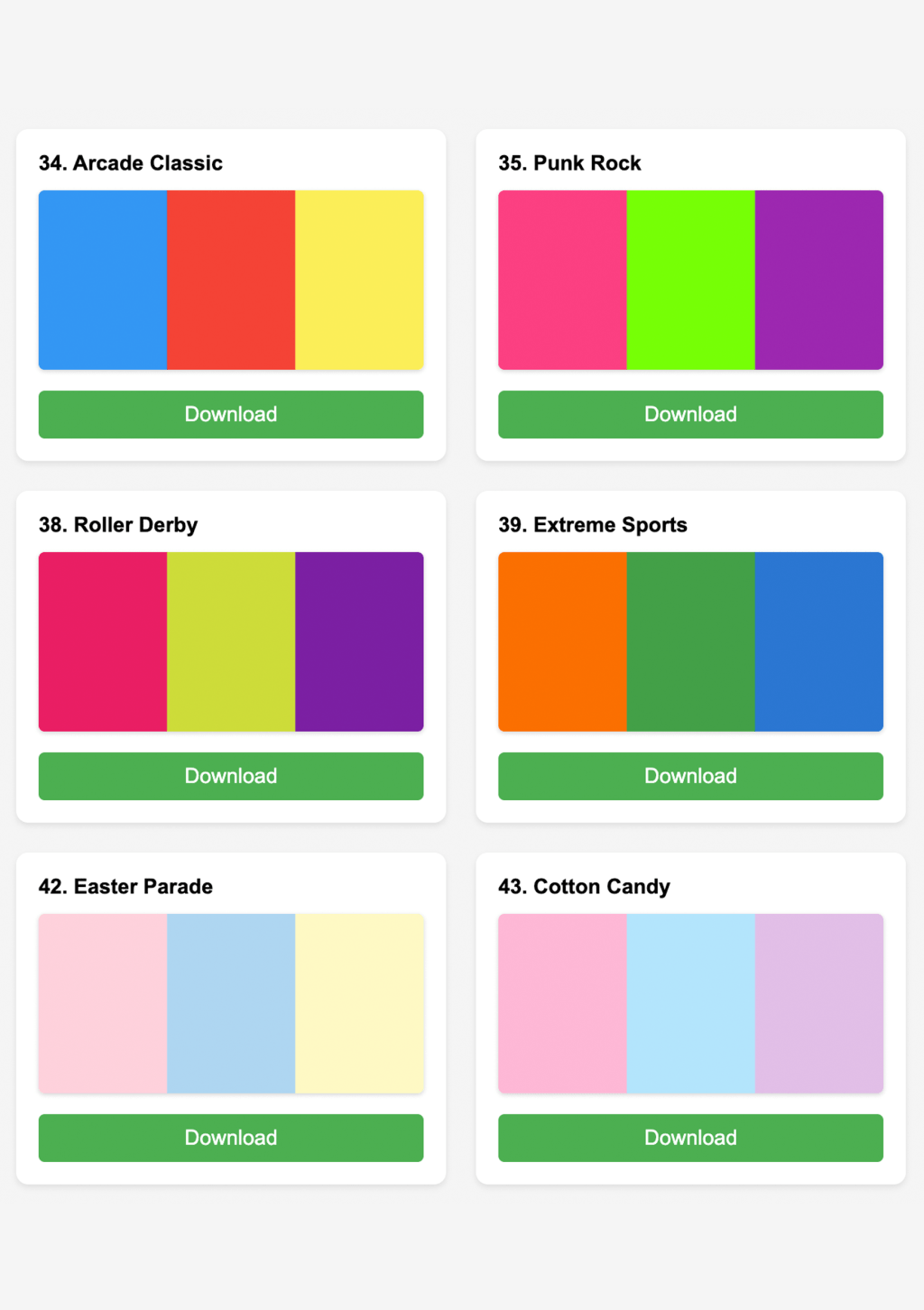
This is a screenshot of the app I wrote, which generated the palettes used to create the majority of the images in this book. It was a great creative aid, helping me make fewer decisions along the way. You can see the app yourself at: https://experiments.randomthebook.com/ColourSwatches
Illustration by Matt Ballantine, 2026
 Random the Book