Questions for you:
- When you see someone successful in a competitive field, do you automatically assume their achievement reflects superior ability, or do you consider the random factors (timing, connections, visibility) that had to align?
- In your own career, can you distinguish which achievements resulted from your skill versus fortunate timing, helpful connections, or being in the right place when opportunity emerged?
- How would your hiring, promotion, or recognition decisions change if you acknowledged that past success in high-variance domains is a poor predictor of future performance?
- When talented people in your organisation don’t advance, do you assume a lack of ability or consider that random factors (project visibility, manager relationships, timing of opportunities) might explain the gap?
Organisational applications:
Talent evaluation and survivorship bias: Organisations systematically overvalue credentials and past success whilst ignoring equally talented people who lacked lucky breaks. When hiring creatives, strategists, or anyone in high-variance roles, recognise that visible portfolios reflect opportunity as much as ability. Interview people who haven’t achieved conventional success markers but demonstrate skill in auditions, trials, or sample work. Many “waiting tables” equivalents exist in every field – talented people who never got representation, visibility, or timing.
Portfolio approach to creative development: Since individual creative outcomes depend heavily on random factors (audience readiness, cultural timing, algorithmic promotion), treat creative work as a portfolio investment. Fund many small projects rather than betting heavily on predicted winners. Research shows successful creative output comes from volume – producing many works increases the probability that some will succeed through fortunate timing. Netflix’s strategy of funding diverse content rather than predicting hits reflects this understanding.
Recognition systems that acknowledge randomness: Performance reviews in high-variance domains (sales during market shifts, product launches, creative projects) systematically reward luck while punishing bad timing. Design recognition systems separating decision quality from outcome quality. Evaluate whether people made good decisions given available information, not whether random factors produced good results. This prevents penalising good work that encountered bad luck whilst avoiding promoting lucky mediocrity.
Path dependence and opportunity distribution: Early lucky breaks (a high-visibility first project, a well-connected mentor, being in an expanding department) create compounding advantages over a career. Talented people who lack early breaks never have the opportunity to demonstrate their ability. Actively distribute opportunities to people who haven’t benefited from random early advantages. Rotate high-visibility assignments, mentor those outside established networks, and create alternative paths to advancement.
Further reading:
Luck and success in creative careers
- Success and Luck by Robert H. Frank – economist’s analysis demonstrating that small random advantages early in careers compound into large outcome differences, showing successful people systematically underestimate luck’s role in their achievements and explaining why talented people often don’t succeed.
- The Success Equation by Michael J. Mauboussin – provides framework for untangling skill and luck across domains, demonstrating that creative fields have such high randomness that individual career outcomes provide insufficient data to distinguish systematic ability from fortunate timing.
- Fooled by Randomness by Nassim Nicholas Taleb – argues people systematically underestimate role of luck in success, mistaking random outcomes for skill, with extensive discussion of survivorship bias in competitive fields where visible winners aren’t necessarily most talented.
Survivorship bias and attribution errors
- Thinking, Fast and Slow by Daniel Kahneman – demonstrates systematic biases in evaluating success and failure, showing people attribute own success to internal factors whilst blaming failure on circumstances, creating “attribution trap” that prevents recognising role of randomness.
- The Halo Effect by Phil Rosenzweig – exposes how success retrospectively appears inevitable, showing we systematically overattribute outcomes to ability whilst ignoring random factors, leading to faulty hiring and promotion decisions.
- Antifragile by Nassim Nicholas Taleb – discusses how systems that benefit from randomness differ from those harmed by it, arguing that creative domains require portfolio approaches acknowledging luck’s dominance over individual talent in determining outcomes.
Creative careers and randomness
- The War of Art by Steven Pressfield – addresses psychological barriers creative professionals face, acknowledging that persistence matters not because talent guarantees success but because randomness requires repeated attempts before fortunate timing aligns.
- Art & Fear by David Bayles and Ted Orland – examines why talented artists abandon careers, showing that survivorship in creative fields depends on managing uncertainty and persisting through randomness rather than superior ability.
- Bounce by Matthew Syed – argues against talent myth in favour of practice, but acknowledges that even with skill development, success in competitive domains requires random factors (opportunity, timing, exposure) outside individual control.
About the image:
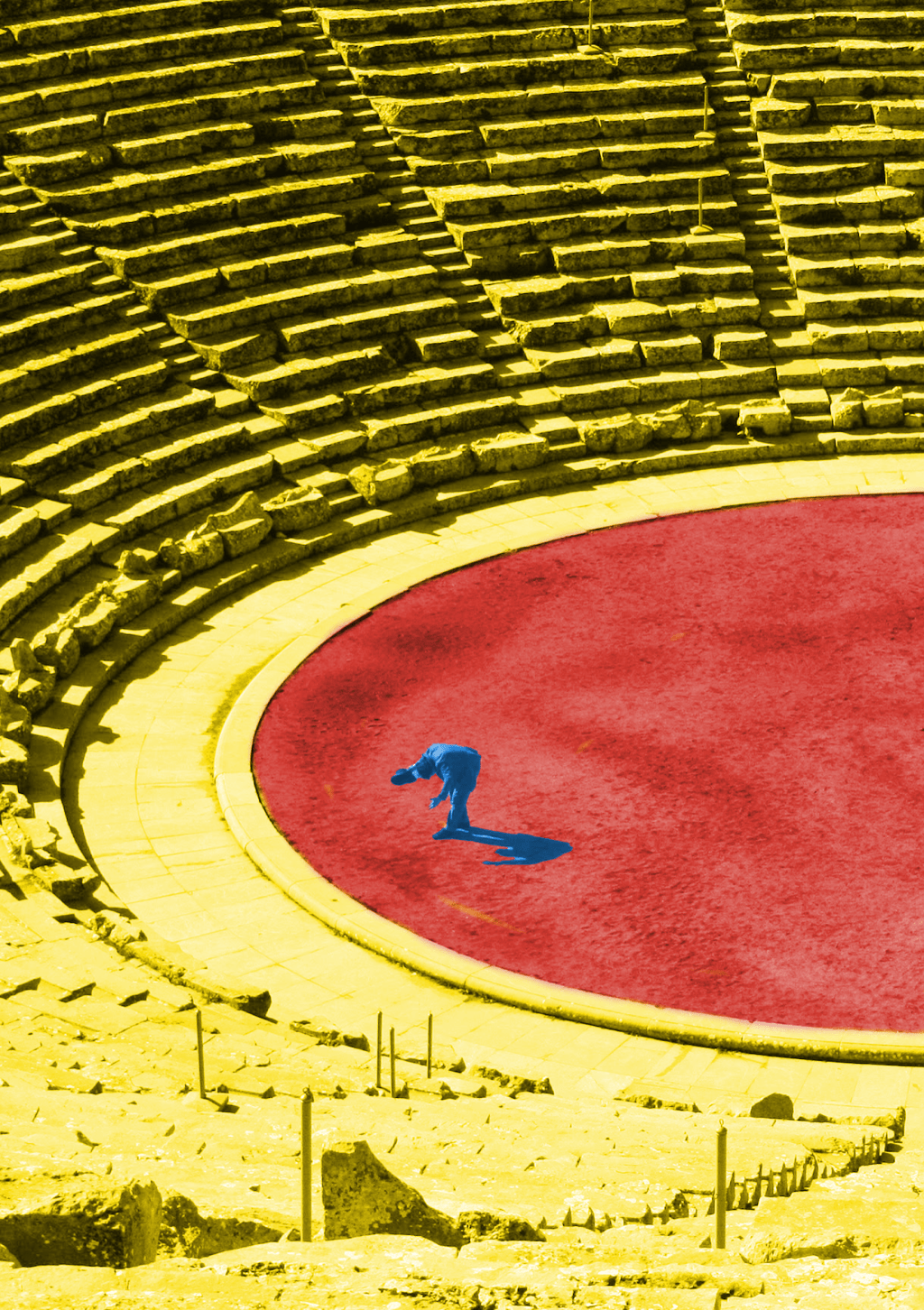
This is one of my favourite photos. A chance snap when a chap was finishing showing off to his mates in an amphitheatre in the Peloponnese.
Photo and photo montage, Matt Ballantine 2006, 2026.
 Random the Book