Questions for you:
- When facing uncertainty in your work or life, do you find yourself paralysed by the unpredictability, or do you use stable periods to build resilience and capacity for when things inevitably become chaotic?
- What “flood defences” have you built in your professional life – redundancy, skills, networks, resources – that allow you to weather random setbacks when they arrive?
- How much of your current success or failure can you honestly attribute to preparation and skill versus fortunate or unfortunate timing and circumstances beyond your control?
- When you reflect on setbacks, do you tend to blame uncontrollable external forces (bad luck, Fortune, timing) or examine what you could have done differently to prepare for predictable categories of unpredictability?
Organisational applications:
Scenario planning and resilience building: Use periods of stability to build capacity for handling unpredictable disruptions. Don’t wait for crises to develop response capabilities. Machiavelli’s flood metaphor applies directly – build “defences and barriers” during fair weather: redundant systems, cross-trained staff, emergency funds, alternative suppliers, documented procedures.
Distinguishing controllable from uncontrollable factors: Explicitly categorise which aspects of your strategy you can influence versus which depend on external randomness. Machiavelli’s insight that “half of our actions are under our own influence” suggests focusing energy on preparation within your control rather than attempting to predict or control inherently random external events.
Adaptive vs. predictive planning: Stop trying to predict the unpredictable. Build adaptive capacity that works across multiple scenarios rather than detailed plans optimised for specific forecasts. Fortune’s “raging river” cannot be predicted exactly, but you can build infrastructure that channels its force regardless of precise timing or magnitude.
Cultural attitudes toward uncertainty: Examine whether your organisation’s culture treats setbacks as failures of planning or as inevitable encounters with randomness requiring resilience. Machiavelli rejected his contemporaries’ passive fatalism about Fortune; modern organisations should reject both passive fatalism (“nothing we could do”) and hubristic overconfidence (“we can control everything”).
Further reading
Machiavelli and Renaissance thinking
The Prince by Niccolò Machiavelli – the original text where Machiavelli argues that half of outcomes are under our control and advises building defences during fair weather to channel Fortune’s force when storms inevitably arrive, foundational text for understanding how Renaissance thinkers conceptualised chance versus agency.
Machiavelli: A Very Short Introduction by Quentin Skinner – contextualises Machiavelli’s revolutionary argument that humans can actively prepare for Fortune rather than passively accepting divine will, showing how this represented a fundamental shift in thinking about human agency and randomness.
Preparation and resilience
- Antifragile by Nassim Nicholas Taleb – modern exploration of building systems that benefit from randomness and volatility rather than merely resisting it, extending Machiavelli’s insight that we should prepare for unpredictability rather than attempting to eliminate it.
- The Black Swan by Nassim Nicholas Taleb – examines how rare, unpredictable events dominate history and why we systematically underestimate their impact, arguing like Machiavelli that we should build robustness against inherent unpredictability rather than attempting to forecast specific scenarios.
- Resilience Thinking by Brian Walker and David Salt – ecological and systems approach to building capacity to absorb disruptions, directly paralleling Machiavelli’s flood metaphor with modern understanding of how systems can channel unpredictable forces.
Historical attitudes toward chance and control
- The Dice Man by Luke Rhinehart – fictional exploration of completely surrendering to chance, providing stark contrast to Machiavelli’s balanced view that we control half our outcomes and should actively prepare for the half we don’t control.
- Against the Gods: The Remarkable Story of Risk by Peter L. Bernstein – history of probability and risk management from ancient times through modern finance, documenting the shift from fatalistic attitudes toward Fortune (as Machiavelli’s contemporaries held) to active risk management (as Machiavelli advocated).
- The Luck Factor by Richard Wiseman – psychological research demonstrating that “lucky” people actively create conditions for fortunate outcomes through specific behaviours, modern scientific support for Machiavelli’s argument that Fortune “favours the adventurous” who prepare and act boldly.
About the image
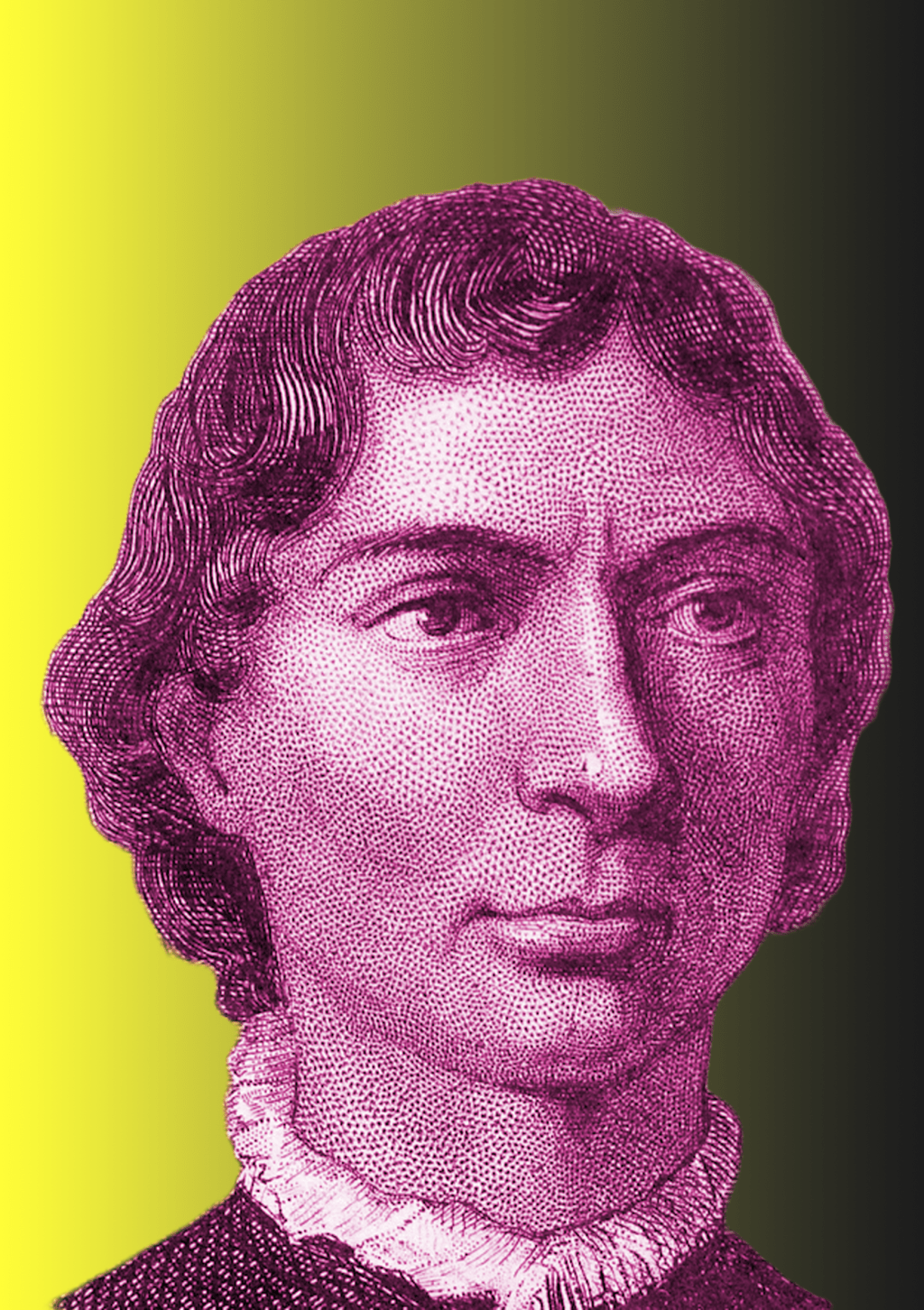
A 19th Century engraving of Machiavelli.
Illustration by Matt Ballantine, 2026
 Random the Book