Questions for you:
- What capabilities, knowledge, or perspectives are you missing out on because you don’t speak the appropriate language? Not necessarily a national language, but the terminology of an associated profession or discipline close to your own?
- How do you approach new and unfamiliar language in your usual professions or hobbies? Something to abhor, or something to welcome? Does it intrigue you? When you evaluate ideas or approaches, how much does your familiarity with the language used influence your assessment, versus the intrinsic merit of the idea itself?
- If you were designing a system to preserve the most valuable knowledge in your organisation, would it naturally capture insights from junior staff, contractors, or people in non-prestigious roles – and how would it be written? Whose language would be used?
- Who among your peers knows a language you don’t? What simple words could they teach you? Which concepts from that language are the most alien to your native tongue?
Organisational applications:
Knowledge preservation systems: It’s at a lower level than an entire language, but ensure that company documentation is written in terms that still make sense once the author has left the organisation. Are difficult terms defined? Are documents refreshed periodically to ensure meaning isn’t lost.
Language in context: If you’re in a multi-lingual company and you’re using AI assisted translations to work through your documentation to make it accessible to all, are you sure its always correct, or correct enough? If accuracy isn’t crucial, pick out random documents and have human translators check the automated work. If accuracy is crucial, how can you ensure that the translations are correct?
Further reading
Language extinction and diversity
Don’t Sleep, There Are Snakes by Daniel Everett – linguistic anthropologist’s account of the Pirahã language in the Amazon, demonstrating how grammatical structures encode unique conceptual frameworks that disappear when languages die, challenging universal grammar theories.
The Last Speakers by K. David Harrison – documents endangered languages worldwide, showing how each extinction eliminates unique knowledge about local ecosystems, medicinal practices, and cognitive approaches that cannot be reconstructed from related languages.
Language Death by David Crystal – comprehensive analysis of why languages die, demonstrating that extinction follows patterns of economic and political power rather than linguistic sophistication, with practical implications for preservation efforts.
Historical accidents and path dependence
The Better Angels of Our Nature by Steven Pinker – argues that declining violence resulted partly from contingent historical accidents (which cultures expanded, which leaders emerged) rather than inevitable moral progress, showing how different random outcomes could have produced very different modern world.
Guns, Germs, and Steel by Jared Diamond – demonstrates how geographic and biological accidents determined which civilisations dominated, not inherent superiority, with implications for understanding which languages, technologies, and cultural practices survived to the present.
The Selfish Gene by Richard Dawkins – introduces concept of “memes” as cultural units subject to evolutionary selection, explaining how ideas, languages, and practices survive based on transmission advantages rather than intrinsic quality.
Organisational knowledge loss
Loonshots by Safi Bahcall – examines why organisations systematically eliminate “crazy” ideas that don’t fit current power structures, even when these ideas have merit, drawing parallels to linguistic and biological extinction patterns.
The Knowledge-Creating Company by Ikujiro Nonaka and Hirotaka Takeuchi – Japanese business philosophy emphasising tacit knowledge preservation, particularly relevant as it addresses how organisational knowledge dies when not explicitly captured and transmitted.
Turn the Ship Around! by L. David Marquet – submarine commander’s account of distributing decision-making authority throughout hierarchy, revealing how concentrating knowledge at the top makes organisations vulnerable to accidents of personnel change.
About the image
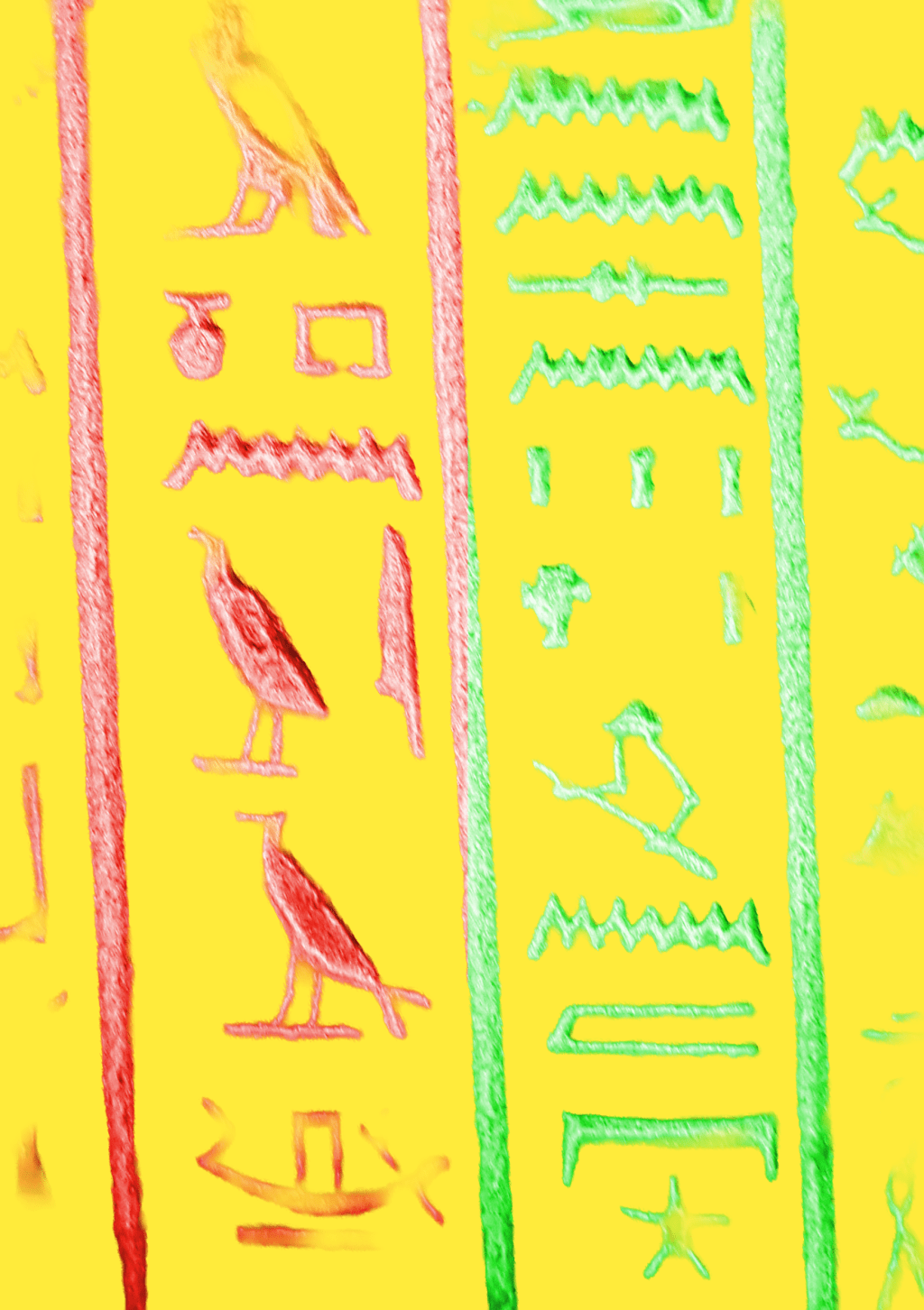
A close up of hieroglyphics on an Egyptian tomb in the British museum.
Photo montage and photo by Matt Ballantine, 2026
 Random the Book