Questions for you:
- How much of my best work emerges from responding to unexpected developments rather than executing plans?
- Do I leave enough flexibility in my approach to capitalise on spontaneous opportunities?
- When something unexpected occurs, do I see it as a disruption or a potential resource?
- When something unexpected occurs, am I excited or dismayed? Why?
Organisational applications:
Structured improvisation training programmes:
As jazz musicians master scales before improvising, organisations could develop deliberate frameworks that enable productive spontaneity. Implement “improvisation protocols” in which teams practice responding to unexpected developments within defined boundaries—when customer requirements change mid-project, when budget constraints suddenly shift, or when key personnel become unavailable. The paradox: you required structured practice to learn how to thrive in unstructured situations. Run regular simulations introducing random disruptions to planned work, measuring whether teams trained in improvisation frameworks adapt more effectively than those relying purely on rigid processes. Great improvisers understand rules thoroughly enough to break them productively; similar organisational capability requires mastering standard procedures before learning when to abandon them.
Post-implementation learning from unplanned successes:
Most organisations conduct post-mortems on failures but rarely analyse unplanned successes. Like missed notes becoming melodies, valuable outcomes often emerge from responding to unexpected developments rather than executing original plans. Implement systematic capture of “productive accidents”—moments in which deviating from the plan produced superior results. Document what enabled the team to recognise and capitalise on unexpected opportunities, rather than treating any deviation as an inevitable failure requiring correction.
Flexibility metrics in project evaluation:
Traditional project management treats any deviation from the original plan as a failure that requires justification. Like improv performers who can’t predict which unexpected moments will become highlights, teams working in uncertain domains cannot foresee which adaptations will prove valuable. Evolve your evaluation frameworks so that they credit teams for productive responsiveness to changing conditions, rather than only rewarding plan execution. Measure “adaptive value created”—outcomes achieved by intelligently pivoting when circumstances changed, versus rigidly following outdated plans regardless of the outcome.
“Yes, and” protocols for handling disruptions:
Import improvisation theatre’s fundamental rule: when presented with something unexpected, accept it (“yes”) and build on it (“and”) rather than rejecting or ignoring. When projects encounter unexpected developments—the customer requests a change, proven technology proves unsuitable, or market conditions shift—train your teams to first ask “how can we work with this?” rather than defaulting to “how do we eliminate this disruption?”. Of course not all surprises should be embraced, but organisations reflexively treating all deviation as problematic miss opportunities that skilled improvisers would recognise, and that might differentiate you from more staid and stale competitors.
Further reading
On improvisation and spontaneity:
Impro: Improvisation and the Theatre by Keith Johnstone (Routledge, 1979). Definitive text on improvisation including fundamental principles of accepting and building on unexpected developments, essential for understanding how structure enables rather than constrains spontaneity.
In the Moment: Build your confidence, communication and creativity at work by Neil Mullarkey (Watkins, 2019). Comedy Store improviser’s application of improv principles to everyday life including techniques for responding productively to unexpected situations rather than being derailed by them.
Improv Your Life: An improviser’s guide to embracing whatever life throws at you by Pippa Evans (Hodder, 2020). Another Comedy Store improviser on applying theatrical improvisation techniques to personal and professional contexts, with practical exercises for developing comfort with uncertainty.
On jazz and creative spontaneity:
Yes to the Mess: Surprising Leadership Lessons from Jazz by Frank J. Barrett (Harvard Business Review Press, 2012). Management professor and jazz pianist on how improvisation principles apply to organisational leadership including balancing structure with spontaneity and responding productively to mistakes.
Effortless Mastery: Liberating the Master Musician Within by Kenny Werner (Jamey Aebersold Jazz, 1996). Jazz pianist on developing comfort with spontaneity through deep preparation, relevant for understanding how technical mastery enables improvisation.
Thinking in Jazz: The Infinite Art of Improvisation by Paul F. Berliner (University of Chicago Press, 1994). Comprehensive ethnographic study of jazz improvisation including how musicians develop ability to create coherent music whilst responding to unpredictable developments.
On embracing uncertainty and adaptation:
The Lean Startup: How Today’s Entrepreneurs Use Continuous Innovation to Create Radically Successful Businesses by Eric Ries (Crown Business, 2011). Methodology emphasising rapid adaptation to unexpected market feedback rather than rigid plan execution, parallels improvisation’s responsiveness to emergent conditions.
Antifragile: Things That Gain from Disorder by Nassim Nicholas Taleb (Random House, 2012). Framework for building systems benefiting from volatility and unexpected developments rather than merely resisting them, philosophical foundation for embracing productive disruption.
Team of Teams: New Rules of Engagement for a Complex World by General Stanley McChrystal (Portfolio, 2015). Military experience requiring adaptive response to unpredictable situations, with frameworks for building organisational capability to respond productively to unexpected developments rather than following predetermined plans.
About the image:
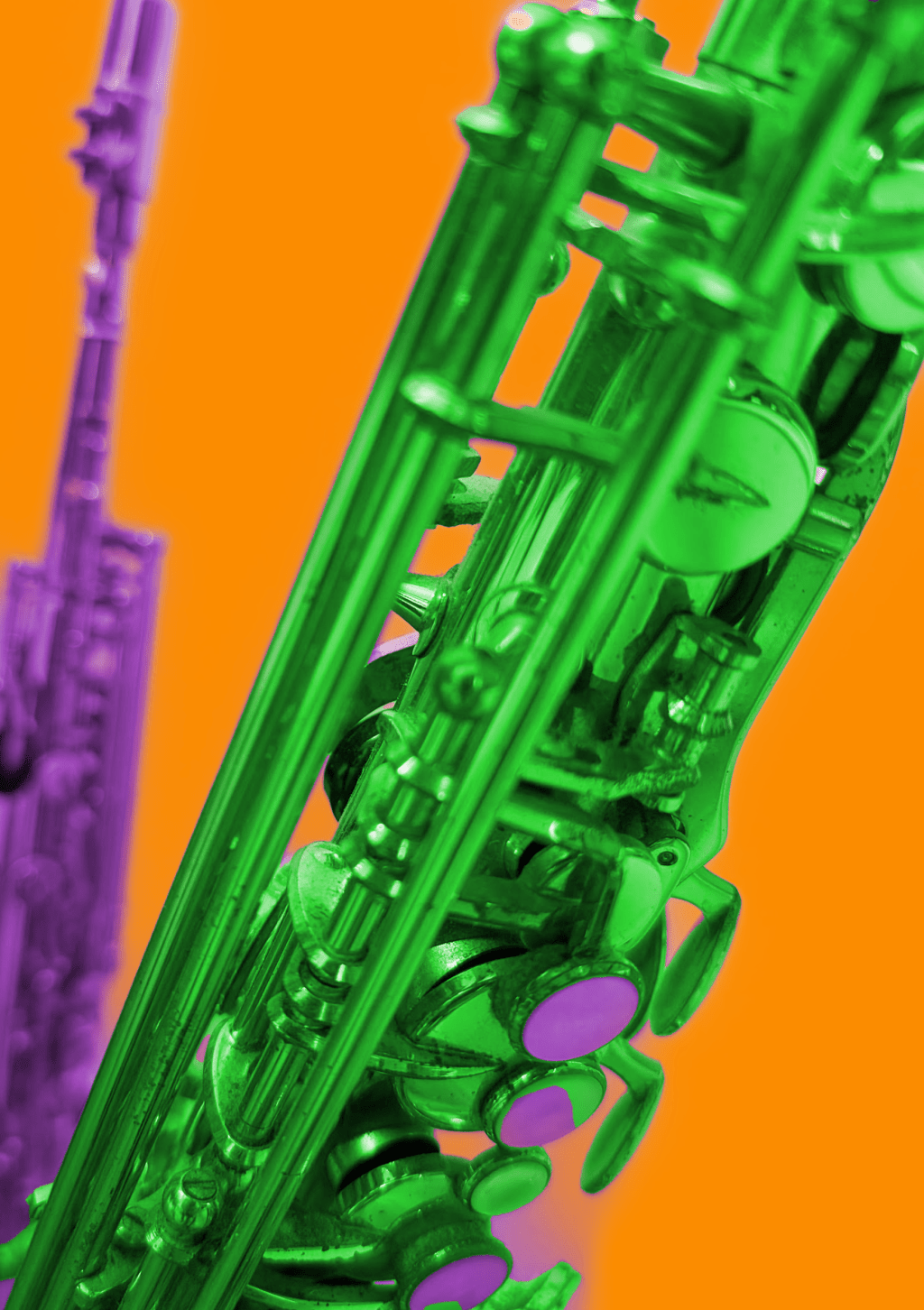
Two of my small family of saxophones – a Yanigasawa Alto and a Yamaha Soprano in the background. I don’t play them nearly as much as I would like.
Photo and photomontage Matt Ballantine 2026
 Random the Book