Questions for you:
- What mental routines am I following that might be preventing me from seeing new solutions?
- When did I last deliberately change my physical environment or approach to disrupt my thinking patterns?
- Do I recognise when I’m stuck in a cognitive rut, and what techniques do I use to break out?
Organisational applications:
Environmental disruption protocols:
Our thinking is more embodied than we acknowledge—physical environments trigger mental patterns. Implement deliberate environmental rotation for problem-solving teams: move brainstorming sessions between cafés, parks, conference rooms, and stairwells rather than defaulting to the same meeting room. Track whether an increase in novel solutions correlates with environmental changes. The brain’s efficiency machinery creates location-based cognitive ruts; changing physical context interrupts habitual neural pathways. Document which types of problems benefit most from environmental disruption (is it useful for creative challenges but less so for working through routine decisions) and whether forced randomisation of a meeting’s venue produces qualitatively different thinking than self-selected location changes.
Arbitrary constraint workshops:
Like writing without the letter ‘e’ or designing with only three colours, impose deliberate constraints forcing teams away from standard approaches. When developing products, require “no-screen” solutions, mandate implementation using only open-source tools, or restrict budgets to 10% of normal allocation. Constraints that seem unhelpful can actually liberate thinking by eliminating default options. Most organisations optimise for removing constraints; occasionally, adding arbitrary ones breaks cognitive routines. Compare solutions developed under arbitrary constraints versus unconstrained exploration, measuring whether constrained teams produce more novel approaches despite (or because of) artificial limitations.
Time-pressure cognitive disruption:
Implement “15-minute solutions” for problems typically requiring weeks of deliberation. The pressure prevents teams from falling back on usual analytical processes, forcing intuitive rather than systematic thinking. Not all problems suit time pressure, but efficiency-oriented organisations systematically under-utilise time constraints as creative tools. Create parallel tracks: conventional analysis proceeds normally whilst a separate team attempts a rapid-fire solution under severe time pressure. Document whether time-constrained approaches identify possibilities that methodical analysis misses, and whether hybrid approaches (quick intuition followed by analytical validation) outperform purely methodical processes.
Forced heterogeneous collaboration:
Cognitive ruts emerge from working repeatedly with similar thinkers. Mandate collaboration between radically different domains: pair engineers with poets, finance analysts with theatrical directors, operations specialists with philosophers. Like the brain’s pattern-detection machinery that creates shortcuts, professional communities develop shared assumptions that are invisible to insiders. Outsiders shatter these assumptions simply by not sharing them – ensure that your outsiders are welcome to ask any question. Track whether heterogeneous teams require longer to reach consensus but produce qualitatively different solutions, and whether disruption value justifies coordination costs. The goal isn’t permanent heterogeneity but the periodic injection of fundamentally different thinking patterns.
Further reading
On habits and cognitive patterns:
The Power of Habit: Why We Do What We Do in Life and Business by Charles Duhigg (Random House, 2012). Comprehensive examination of habit formation including how routines become automatic and techniques for disrupting established patterns, essential for understanding why efficiency creates mental prisons.
Thinking, Fast and Slow by Daniel Kahneman (Farrar, Straus and Giroux, 2011). Nobel laureate’s synthesis distinguishing System 1 (fast, automatic, habitual) from System 2 (slow, deliberative, effortful) thinking, explaining why efficiency machinery makes certain solutions invisible.
Atomic Habits: An Easy & Proven Way to Build Good Habits & Break Bad Ones by James Clear (Avery, 2018). Practical framework for habit formation and disruption including environmental design and constraint techniques applicable to breaking cognitive ruts.
On creativity and constraint:
A Whack on the Side of the Head: How You Can Be More Creative by Roger von Oech (Warner Books, 1983). Classic creativity text including techniques for disrupting habitual thinking through constraints, environmental changes, and deliberate pattern interruption.
The Creative Habit: Learn It and Use It for Life by Twyla Tharp (Simon & Schuster, 2003). Choreographer’s practical approach to creativity including how routine enables rather than constrains innovation when properly structured, and techniques for productive disruption.
Cracking Creativity: The Secrets of Creative Genius by Michael Michalko (Ten Speed Press, 1998). Compilation of techniques used by creative thinkers including arbitrary constraints, forced associations, and environmental manipulation for breaking habitual patterns.
The story of how the colour palettes for the images in this book were generated: https://mmitii.mattballantine.com/2025/10/01/disposable-applications/
On environment and embodied cognition:
The Extended Mind: The Power of Thinking Outside the Brain by Annie Murphy Paul (Houghton Mifflin Harcourt, 2021). Recent examination of how physical environment, gesture, and movement shape thinking, explaining why changing workspace disrupts cognitive patterns.
Where Good Ideas Come From: The Natural History of Innovation by Steven Johnson (Riverhead Books, 2010). Explores how innovation emerges from environmental factors including physical spaces encouraging unexpected connections, relevant for understanding why routine environments constrain thinking.
Mindware: Tools for Smart Thinking by Richard E. Nisbett (Farrar, Straus and Giroux, 2015). Cognitive psychology research on thinking tools including how environmental and social context shapes reasoning, with practical techniques for disrupting automatic patterns.
About the image
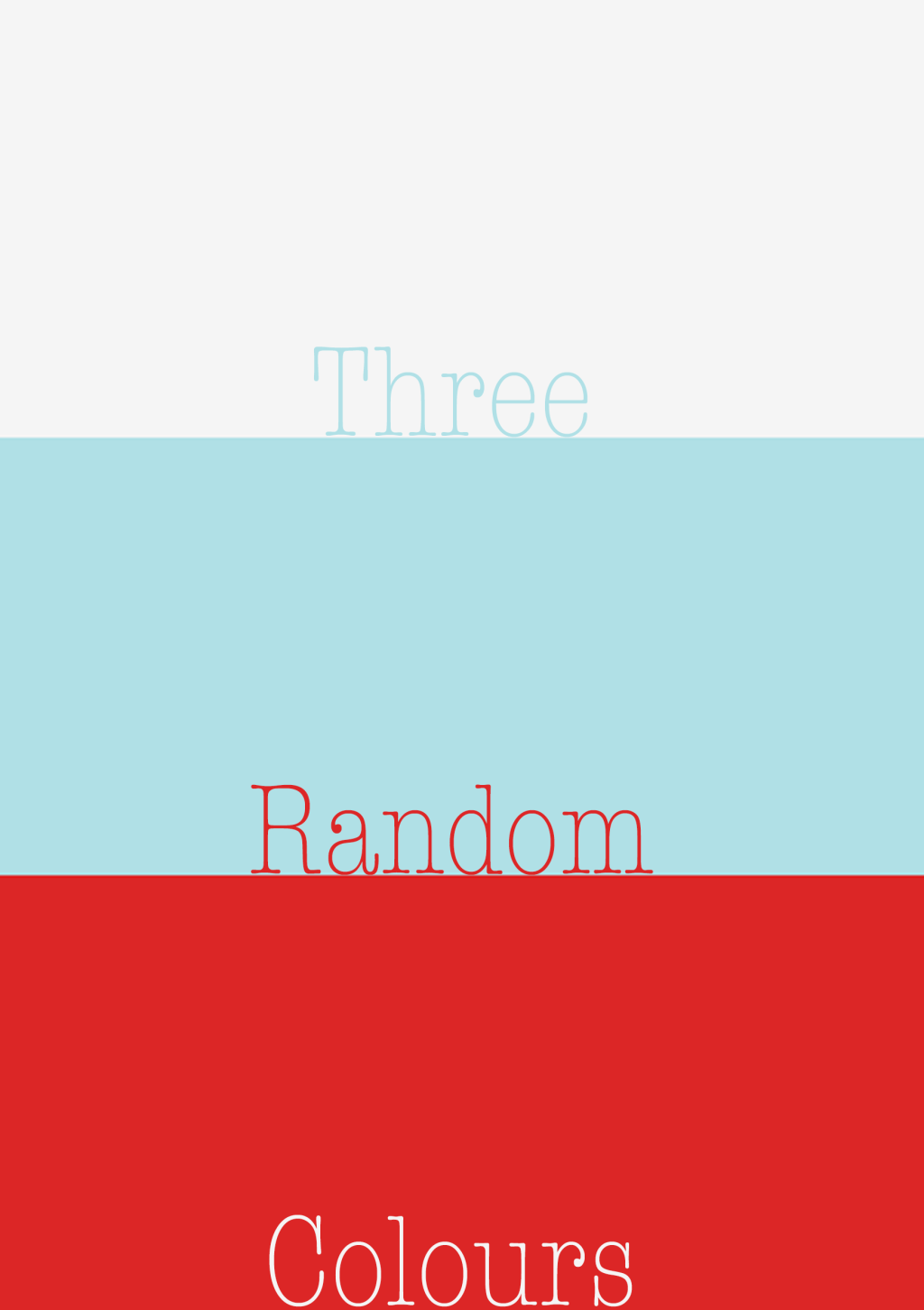
I got stuck quite soon in creating the images. I realised that I needed constraints to be more creative. The answer was a machine (in the form of an app) that created a set of 3-colour Pop Art-inspired palettes that would be the basis for each new image. This illustration illustrates one of those palettes.
Illustration Matt Ballantine 2026
 Random the Book