Questions for you:
- How much of who I am results from random early experiences rather than deliberate choices?
- What assumptions or preferences do I hold that might trace back to chance encounters or arbitrary childhood exposure?
- Do I give appropriate weight to the role of luck in my own development when judging others?
Organisational applications:
- Hiring for adaptability over fixed traits:
Recognise that personality characteristics and preferences employees present during hiring may reflect neurological accidents from formative periods rather than fixed innate qualities. Someone who “isn’t a people person” may simply lack memorable positive social experiences during crucial developmental windows, rather than possess inherently antisocial neurology. Structure hiring to assess learning capacity and adaptability rather than treating current personality as immutable. Test how candidates respond to new situations and feedback rather than assuming their self-described traits are permanent. This challenges conventional personality-based hiring while acknowledging that adult identity is more malleable than traditional models suggest. - Developmental timing for critical exposures:
Leverage research on the “reminiscence bump” (ages 15-25) for graduate recruitment and early-career development. Employees in this age range encode experiences more durably than at any later life stage, making early career exposures disproportionately influential on long-term capabilities and preferences. Deliberately expose junior employees to diverse functions, leadership styles, and problem-solving approaches during this neurologically sensitive period. What they encounter randomly during ages 20-25 may shape their career trajectories more than formal training at 35. Document whether early diverse exposure correlates with later adaptability and leadership effectiveness. - Environmental design for formative experiences:
Create varied workplace environments, recognising that random memorable moments shape employee development more than planned interventions. Physical spaces encouraging unexpected encounters, project assignments forcing unfamiliar skill development, and deliberate introduction of novel stimuli all increase the probability of formative experiences. Rather than controlling exactly what employees learn, increase surface area for memorable accidents. Track which employees had diverse early exposures versus narrow functional silos, correlating this with later creative problem-solving and cross-functional effectiveness. - Identity evolution support over personality matching:
Abandon personality-culture fit models assuming employee characteristics remain stable. If core preferences and working styles partly reflect neurological accidents rather than fixed traits, employees retain the capacity for identity evolution throughout their careers. Structure development programmes explicitly acknowledging this plasticity—someone anxious about public speaking may lack memorable positive presentation experiences, not possess immutable presentation-phobia neurology. Create opportunities for new formative experiences rather than slotting people into roles matching current self-descriptions. The colleague who claims “I’m just not creative” may simply need different, more memorable experiences to encode.
Further reading
On memory formation and childhood development:
The Seven Sins of Memory: How the Mind Forgets and Remembers by Daniel L. Schacter (Houghton Mifflin, 2001). Explores how memory systems work including why seemingly trivial moments get preserved whilst important events fade, with implications for understanding personality formation.
The Developing Mind: How Relationships and the Brain Interact to Shape Who We Are by Daniel J. Siegel (Guilford Press, 3rd edition, 2020). Comprehensive examination of how early experiences shape neural development and subsequent personality, including role of random factors in memory consolidation.
Why We Remember: Unlocking Memory’s Power to Hold on to What Matters by Charan Ranganath (Doubleday, 2024). Recent neuroscience research on memory formation including why certain experiences achieve unusual neural encoding whilst others fade regardless of objective importance.
On personality formation and neuroplasticity:
The Brain That Changes Itself: Stories of Personal Triumph from the Frontiers of Brain Science by Norman Doidge (Viking, 2007). Documents neuroplasticity research demonstrating adult brain remains far more malleable than previously believed, challenging assumptions about fixed personality traits.
Behave: The Biology of Humans at Our Best and Worst by Robert M. Sapolsky (Penguin Press, 2017). Comprehensive examination of how biology, childhood experiences, and random developmental factors combine to shape adult behaviour and personality.
The Neuroscience of You: How Every Brain Is Different and How to Understand Yours by Chantel Prat (Dutton, 2022). Recent research on individual brain differences and how developmental experiences create unique neural architectures underlying personality variation.
On implications for identity and development:
Mindset: The New Psychology of Success by Carol S. Dweck (Random House, 2006). Research on growth versus fixed mindsets, relevant for understanding whether personality traits represent immutable characteristics or developmentally contingent patterns.
Range: Why Generalists Triumph in a Specialized World by David Epstein (Riverhead Books, 2019). Examines how varied experiences during formative periods create adaptive capabilities, challenging early-specialization models that assume fixed aptitudes.
Stumbling on Happiness by Daniel Gilbert (Knopf, 2006). Explores how humans misunderstand their own preferences and personality formation, including role of random experiences in shaping what we believe are core aspects of identity.
About the image
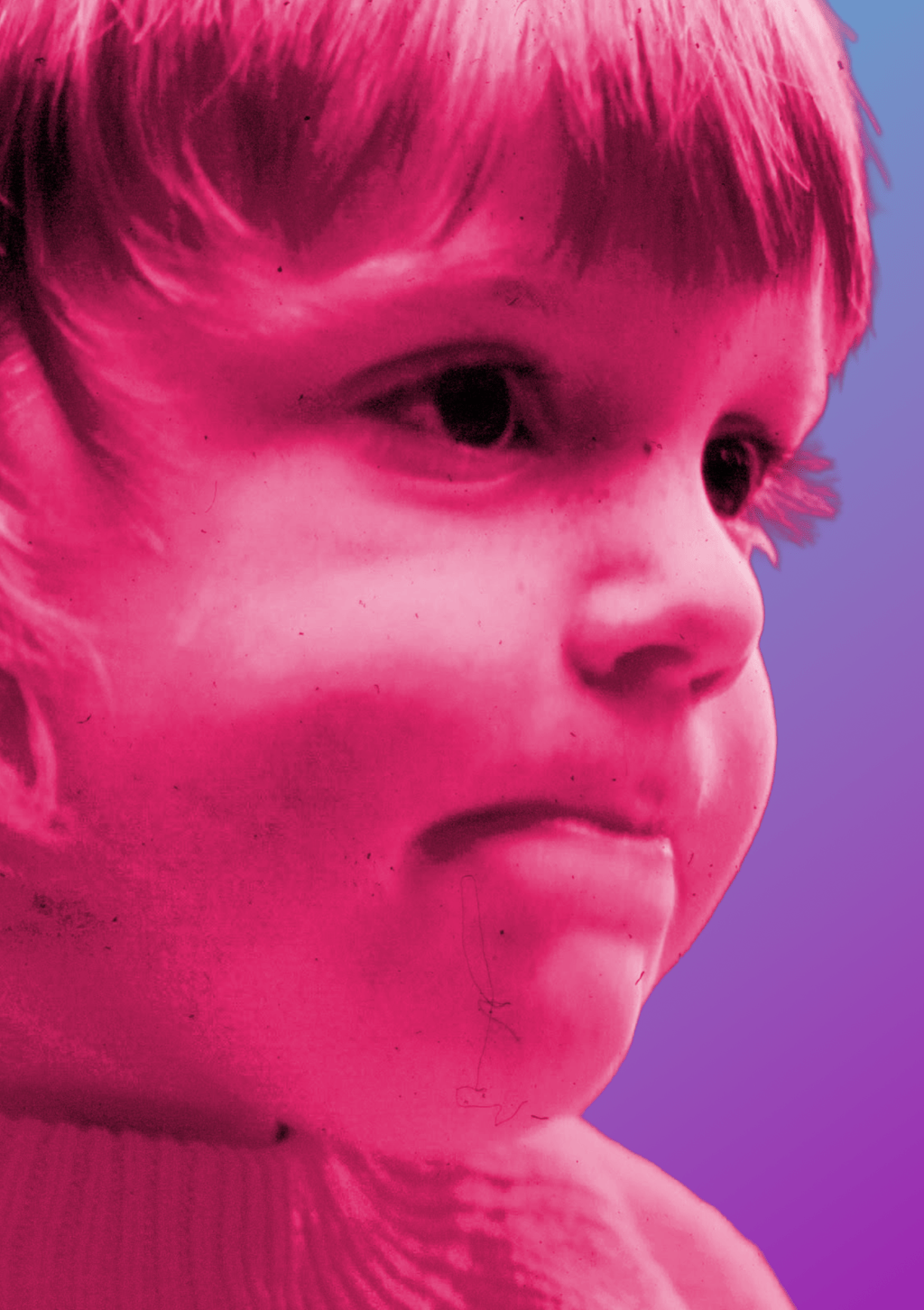
A photo of me, taken by my dad, in 1974.
Photo Malcolm Ballantine 1974, Photo montage Matt Ballantine 2026
 Random the Book