Questions for you:
- What deliberate practices do I have for exposing myself to unexpected inputs, ideas, or perspectives?
- Am I spending too much time in familiar spaces, consuming familiar content, following familiar routines?
- How might I actively cultivate conditions where useful accidents are more likely to occur?
Organisational applications:
- Structured exposure programmes:
Systematically expose employees to unfamiliar domains through mandatory cross-departmental rotations, industry site visits outside your sector, or required attendance at conferences unrelated to their function. Finance teams visit design studios, engineers attend marketing conferences, legal counsel shadow customer service. Document which unexpected connections emerge from these exposures. Unlike conventional training, the goal isn’t learning specific skills but increasing collision probability between disparate knowledge domains. - Serendipity time allocation:
Establish protected time (10-20% of working hours) where employees must pursue activities outside their job descriptions with no accountability for immediate business value. Google’s famous “20% time” produced Gmail and AdSense. The key is genuine freedom from outcome requirements whilst maintaining expectation of exploration. Track which “accidents” prove valuable retrospectively, recognising that most won’t—that’s precisely the point. - Idea collision architecture:
Design physical and virtual spaces to maximise unexpected encounters between people who wouldn’t normally interact. Place coffee machines at corridor intersections not within departments, create shared equipment that forces cross-functional contact, rotate desk assignments quarterly. Pixar deliberately placed bathrooms centrally to force different departments to encounter each other. Digital equivalents include random video coffee chats, cross-functional Slack channels on non-work topics, and mandatory attendance at company-wide showcases. - Peripheral vision practices:
Train teams to actively notice and investigate anomalies rather than dismissing them as noise. When data doesn’t fit expectations, customer behaviour seems odd, or processes produce unexpected results, treat these as potential discoveries rather than errors requiring correction. Establish “interesting anomaly” sharing sessions where teams present things that don’t make sense. Fleming’s discovery of penicillin required noticing contaminated cultures; most researchers would have discarded them as failed experiments.
Further reading
On serendipity and designed accident-seeking:
Where Good Ideas Come From: The Natural History of Innovation by Steven Johnson (Riverhead Books, 2010). Examines how innovations emerge from “liquid networks” where ideas collide accidentally, with historical examples of designed serendipity from coffeehouses to research labs.
Get Lucky: How to Put Planned Serendipity to Work for You and Your Business by Thor Muller and Lane Becker (Jossey-Bass, 2012). Practical strategies for deliberately creating conditions where fortunate accidents become more likely in organisational contexts.
The Click Moment: Seizing Opportunity in an Unpredictable World by Frans Johansson (Portfolio, 2012). Explores how breakthrough success often results from deliberate accident-seeking rather than careful planning, with organisational applications.
On the productive value of disorder:
Messy: The Power of Disorder to Transform Our Lives by Tim Harford (Riverhead Books, 2016). Examines how disorder, improvisation, and mess generate creativity and innovation across domains from music to business. Challenges assumptions that efficiency requires tidiness and argues that messiness often produces better outcomes.
A Perfect Mess: The Hidden Benefits of Disorder by Eric Abrahamson and David H. Freedman (Little, Brown, 2007). Documents how moderate disorder and untidiness can improve creativity, flexibility, and innovation whilst obsessive organisation can stifle productivity and discovery.
On cognitive flexibility and idea recombination:
Range: Why Generalists Triumph in a Specialized World by David Epstein (Riverhead Books, 2019). Research-based examination of how broad exposure and varied experience enable unexpected connections that specialists miss, advocating deliberate cultivation of diverse knowledge.
The Medici Effect: What Elephants and Epidemics Can Teach Us About Innovation by Frans Johansson (Harvard Business School Press, 2004). Explores how breakthrough innovations emerge at intersections between disciplines, industries, and cultures—the “Medici Effect”—arguing for deliberate intersection-seeking.
On prepared minds recognising accidents:
Creativity, Inc.: Overcoming the Unseen Forces That Stand in the Way of True Inspiration by Ed Catmull (Random House, 2014). Pixar president on creating organisational conditions where creative accidents can happen and be recognised, including architectural and cultural design for serendipity.
The Art of Scientific Investigation by W.I.B. Beveridge (Vintage, 1957). Classic text on how scientific discoveries emerge from accidents noticed by prepared minds, examining what distinguishes researchers who recognise significance in anomalies.
On creative processes and accident-seeking:
Imagine: How Creativity Works by Jonah Lehrer (Houghton Mifflin Harcourt, 2012). Though later discredited for fabrications in other sections, the chapters on creative environments, urban density effects, and designed collision spaces remain well-researched and valuable.
Daily Rituals: How Artists Work by Mason Currey (Knopf, 2013). Examines working habits of creative practitioners, revealing how many deliberately court accidents through walks, varied routines, and exposure to unfamiliar stimuli.
On organisational design for serendipity:
Organizing Genius: The Secrets of Creative Collaboration by Warren Bennis and Patricia Ward Biederman (Perseus Books, 1997). Case studies of highly creative groups (Xerox PARC, Lockheed Skunk Works) examining how physical and social structures enabled productive accidents.
Ten Types of Innovation: The Discipline of Building Breakthroughs by Larry Keeley et al. (Wiley, 2013). Includes frameworks for designing innovation processes that deliberately increase collision probability between ideas, disciplines, and perspectives.
On Bowie’s methods specifically:
Bowie: An Illustrated Record by Roy Carr and Charles Shaar Murray (Avon Books, 1981). Includes discussion of Bowie’s cut-up lyric techniques and deliberate cross-pollination of artistic influences.
Strange Fascination: David Bowie: The Definitive Story by David Buckley (Virgin Books, 2005). Biography exploring Bowie’s systematic approach to absorbing diverse influences and creating conditions for artistic accidents.
David Bowie talking about the cut-up technique and describing it as a “Western tarot”: https://www.youtube.com/watch?v=m1InCrzGIPU
On other artists:
A biography of Vivian Maier: https://www.vivianmaier.com/about-vivian-maier/
William Burroughs talking about his cut-up method: https://www.youtube.com/watch?v=NTHU5Jal25g
Interactive Exhibit
Do your own cut ups! Paste some text and you can cut up any prose you like!
https://experiments.randomthebook.com/cutup/
About the image
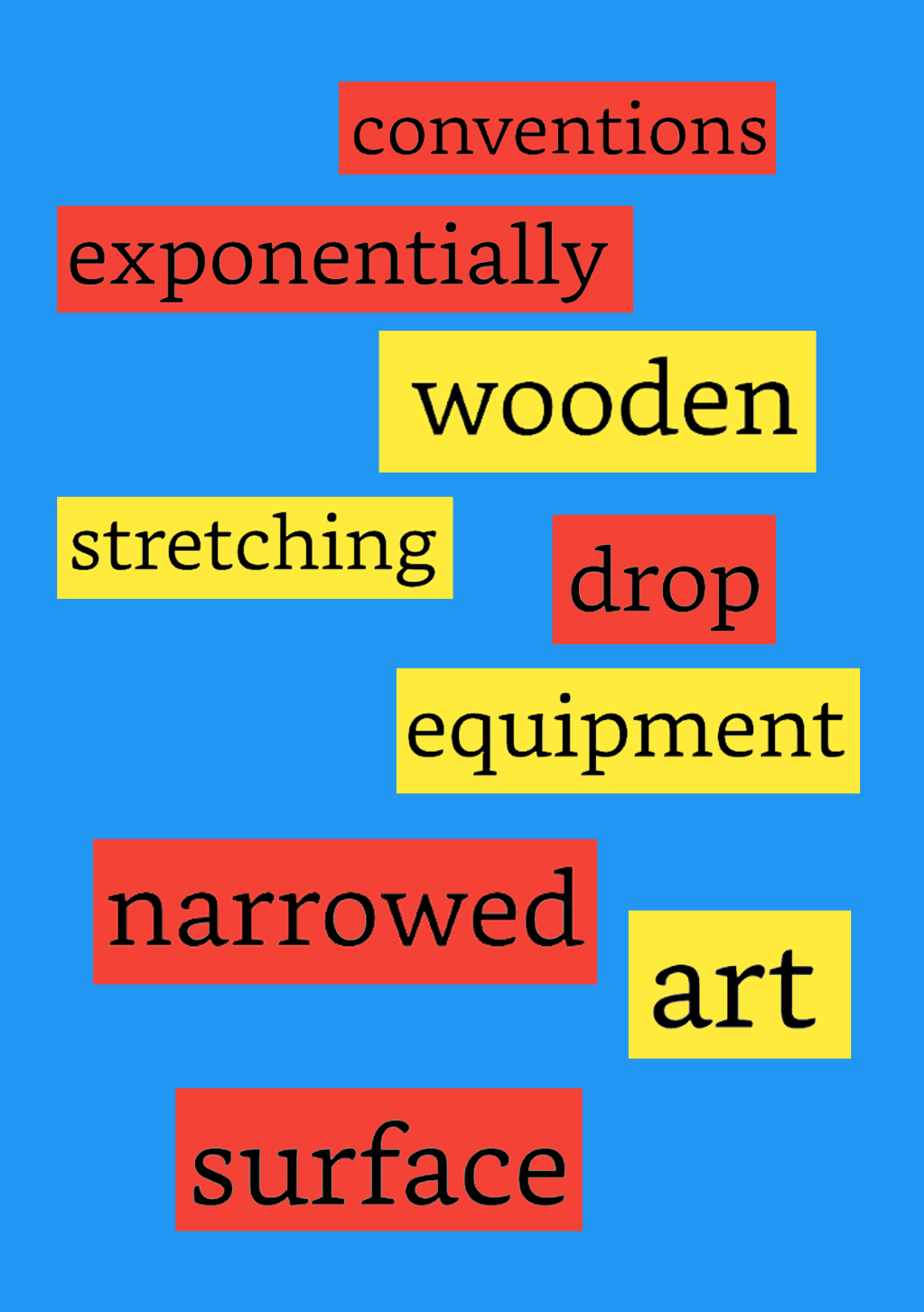
I took some words from Rick Rubin’s book about creativity, The Creative Act and then cut them up.
Image Matt Ballantine 2026
 Random the Book